

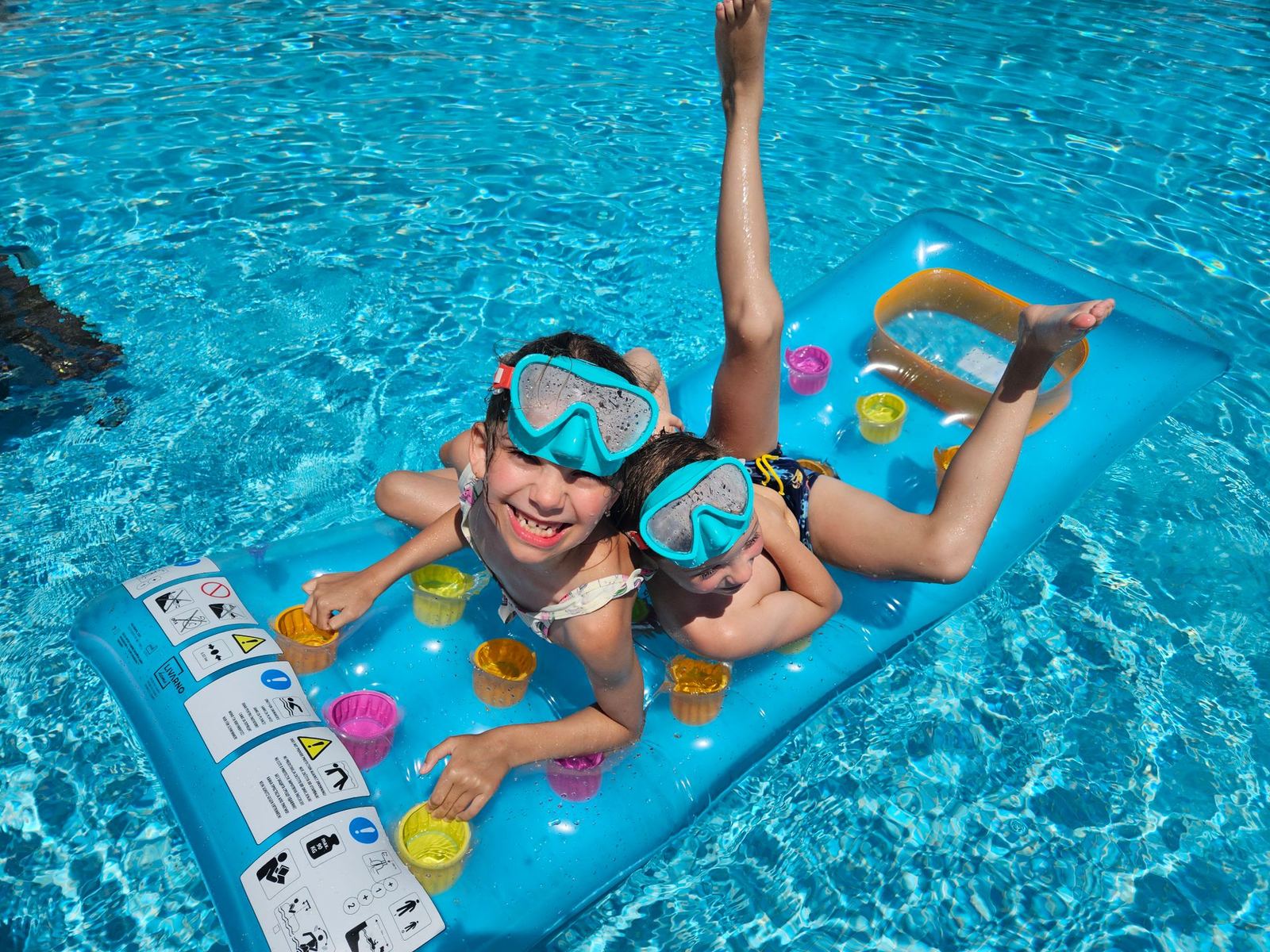
Water confidence at 4, learning strokes at 6: what is possible at each age and what parents should keep in mind.
The question we hear most often from parents is: “At what age should my child start swimming?” The short answer is that getting to know the water comes early, while learning strokes comes with motor development. The longer answer is that every child is ready, physically and emotionally, at a different time. In more than a decade at our pool in Ataköy we have worked with thousands of children, and in this article we share realistic expectations by age.
Ages 4-5: building water confidence
At this age our aim is not to teach a stroke but to help the child enjoy the water and feel safe in it. Putting the face in, breathing out by blowing bubbles, floating with support and getting in and out of the pool safely are the core skills. Because attention spans are short, lessons should not exceed 40 minutes and groups should be small. That is why at Kulaçsu there are no more than four children per coach in Little Strokes groups.
What we ask of parents at this stage is patience. Some children jump in during their first lesson while others sit on the side for four weeks. Pushing usually makes the process longer; progressing through games and songs and celebrating small wins builds lasting confidence.
Ages 6-8: moving to independent swimming
Around the age of six coordination develops noticeably. A child who can move arms and legs at the same time usually swims 10 metres unaided within two to three months of regular lessons. Freestyle and backstroke are taught in this period, and side breathing is settled gradually. Controlled entry into deep water and treading water are also vital skills to learn at this age.
Ages 9-12: technique and all four strokes
Children in this age group understand instructions better and can correct their own movements. Breaststroke and butterfly, turns and starts are taught. For children interested in competitive swimming, moving into a squad usually comes up between the ages of eight and ten. What matters here is the child’s own interest; a parent’s expectations alone are not enough motivation.
Is starting late a disadvantage?
No. A child who starts at ten often picks up the basics faster because their motor skills are more developed. In our adult groups we even have participants learning to swim at sixty. What matters is not age but regularity: two lessons a week lead to noticeably faster progress than one.
How many lessons a week is ideal?
Our experience shows that two lessons a week is the most balanced rhythm: the child does not forget what was learned and does not get overtired. Children who have only one lesson a week start each lesson remembering only part of the previous one, which slows progress. Three lessons a week usually makes sense only in the squad, for children preparing to race. In winter, scheduling lessons close to the end of the school day protects both a child’s energy and their sleep routine.
Three practical tips for parents
- Plan a short refresher period before the summer holiday so that skills are not forgotten.
- Games that involve wetting the face at bath time reduce fear of water.
- Do not compare your child with others; every child’s cap colour changes at its own pace.
To find out which level your child should start at, come to a free level assessment or take the Swimming Level Pre-Test on our website.